
1. Overview
The Configuration sub-module defines the operational rules, legal classifications, and communication templates used across the platform. This ensures standardization of goods categorization, document compliance, and automated messaging.2. Commodities (Merci)
The official registry of merchandise types. Commodities are selected during the Booking phase and are critical for terminal safety and documentation.Key Attributes
- Codice & Descrizione: Unique identifier and full commodity name.
- Logic Mapping: Commodities are linked to HS/NHM codes for international rail compliance.
- Operational Intent: Gross weight defined per commodity in a booking drives the entire rail composition planning logic.
3. Document Management
Defines the different types of official paperwork handled by the system (e.g., CIM, Manifest, Bill of Lading).Technical Mapping
4. Notification Engine (Mail Config)
Manages the automated outward communication.Mail Templates (Modelli Mail)
The system uses Trigger Keys (Chiave) to link templates to operational events.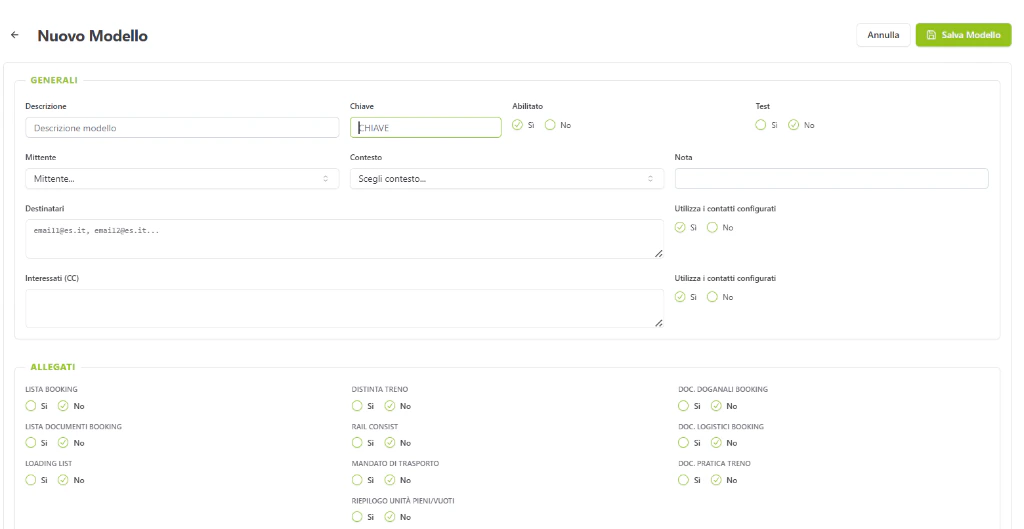
Nuovo Modello: Configuration interface for creating and managing automated mail templates.
- Dynamic Content: IT/EN/FR localized subjects and bodies with WYSIWYG support.
- Automated Routing: Toggles like
invio_ufficio_bookingorinvio_clientiresolve recipients dynamically based on the transaction. - Attachments: Every template can be configured to automatically attach PDF reports (e.g., Booking List, Loading List, Truck Mandate).
Mail Parameters
Direct configuration for the SMTP relay and global audit rules (BCC overrides).5. Network Logic (Zones)
Groups Nodes into geographic or operational regions.- Zoning: Nodes are grouped via
id_zonato enable corridor-based reporting. - Visibility: Used for dashboard filtering and role-based data access.