
1. Overview
Simulations and “What-If” Scenarios provide the critical decision-support layer of the platform. It fulfills the requirement to “allow logistics simulations to be performed on various scenarios, allowing users to analyze the impact of different options and optimize logistics decisions.” This functionality is essential for making informed decisions and evaluating different options before taking concrete action.2. Scope and Business Meaning
Functionally, this deliverable covers the Strategic Planning & Decision Support layer. It ensures:- Scenario Simulation: The ability to model different logistics outcomes based on varying inputs (e.g., “What if we use Rail instead of Road?”).
- Impact Analysis: Clear visibility into the consequences of each option, such as total distance, transit time, and environmental impact.
- Decisive Control: The system empowers the user to evaluate these generated options and requires explicit confirmation to proceed, ensuring human oversight in critical logistics flows.
3. Implemented Functionalities
The platform implements “Simulations” through the Route Scanner and Inquiry Planning modules, which present calculated options for user evaluation.Route Simulations (“What-If”)
Requirement Addressed: “Allow logistics simulations to be performed on various scenarios” The system does not just find one route; it simulates multiple potential logistics chains:- Option Generation: The Route Scanner calculates feasible paths across different modes (Rail, Road, Sea), effectively simulating “What-If” scenarios for each transport type.
- Comparative Visibility: Users can view these options side-by-side to compare trade-offs.
Impact-Based Decision Making
Requirement Addressed: “Analyze the impact of different options and optimize logistics decisions” Before any route is finalized, the system presents the full impact of the choice:- Metric Transparency: Each option displays critical metrics like Total Distance and**Transit Time*.
- User Confirmation: The workflow is designed to pause for decision-making. The system shows the possible options, but “makes the user to confirm” the preferred choice, ensuring that the selected route aligns with specific business goals (e.g., lowest cost vs. fastest delivery).
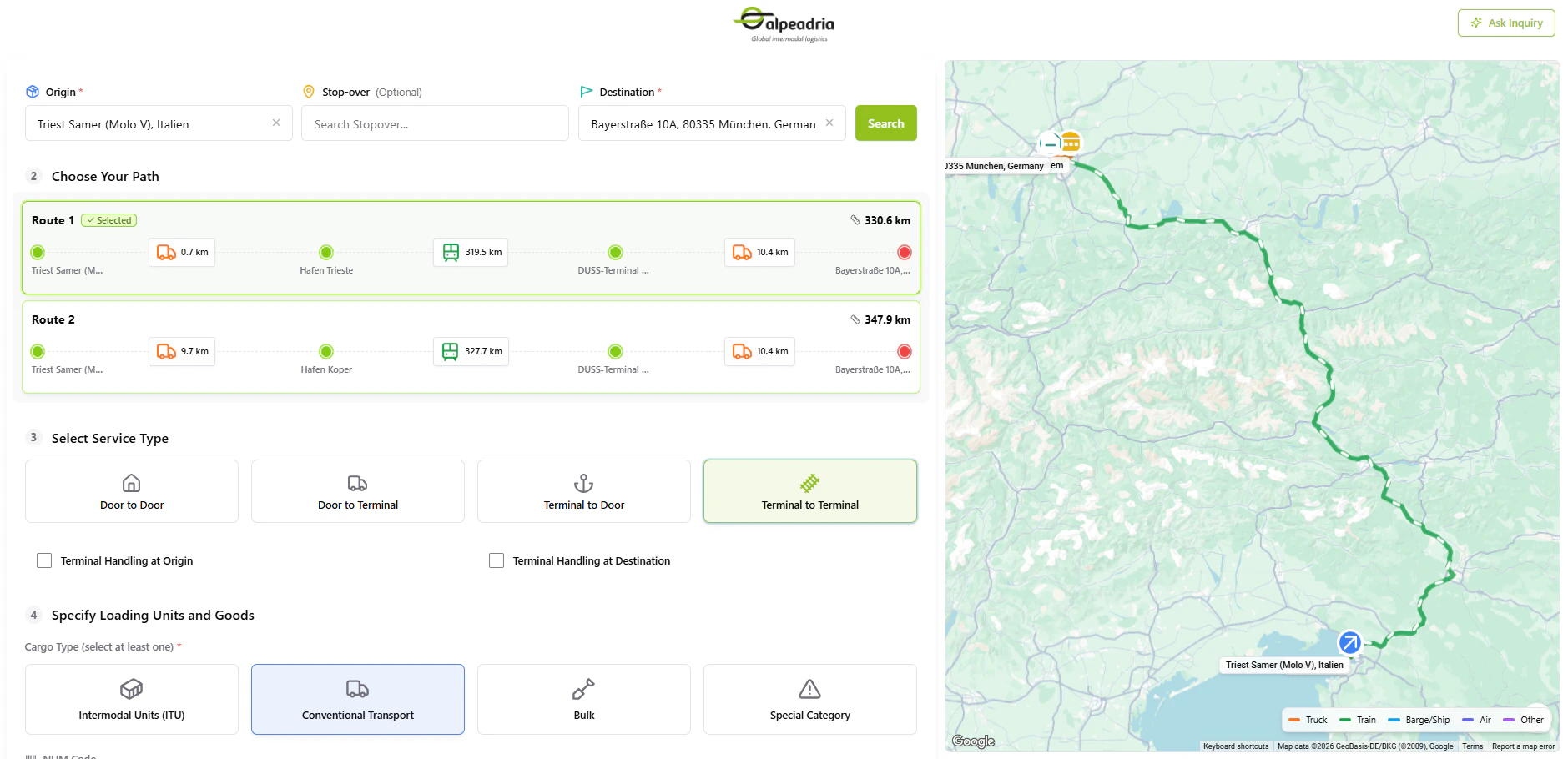
The system displaying multiple simulated route options, allowing the user to compare impacts (distance, time) before making a final decision.
4. Technical Enablement
The platform enables this deliverable through:Simulation Engine
- Multi-Objective Optimization: The routing engine runs simulations to minimize different cost functions (distance, time, price) simultaneously, producing a set of Pareto-optimal choices.
- Interactive Session State: The system maintains a temporary “planning state” where users can toggle between options without committing to a database transaction until the final confirmation.