
1. Overview
Dynamic Management of Logistics Workflows is the agility layer of the platform. It fulfills the requirement to “dynamically manage and adapt to logistics workflows, changing priorities and operations according to changing needs and conditions.” This capability is necessary to manage constantly changing logistical situations, such as unforeseen events, delays, or emergencies, ensuring the supply chain remains resilient.2. Scope and Business Meaning
Functionally, this deliverable covers the Operational Agility & Issue Resolution layer. It ensures:- Workflow Adaptability: The ability to modify the sequence of operations on the fly (e.g., re-routing a task due to a blockage).
- Priority Shifting: Instantly escalating critical issues (emergencies) to the top of the queue.
- Collaborative Problem Solving: Assigning and tracking unstructured work that arises from “unforeseen events.”
3. Implemented Functionalities
The platform implements “Dynamic Workflows” through the Task Management system, which provides a flexible, human-centric layer on top of the automated logistics processes.Visual Workflow Orchestration
Requirement Addressed: “Adapt to logistics workflows” The Kanban Board provides a visual representation of the operational pipeline, allowing managers to adapt workflows instantly:- Drag-and-Drop Re-prioritization: Tasks can be moved between stages (e.g., from “In Progress” to “On Hold”) instantly as conditions change on the ground.
- Visual Bottleneck Identification: A quick glance reveals where tasks are piling up, allowing for immediate resource reallocation. Refer: Task Management
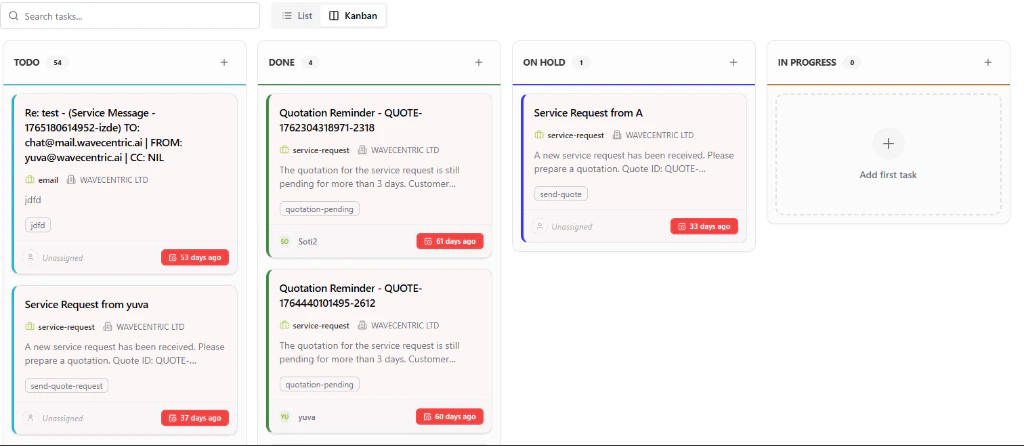
The Kanban board allows for dynamic drag-and-drop management of operational workflows.
Emergency & Priority Management
Requirement Addressed: “Changing priorities… unforeseen events or emergencies” The system allows for rapid response to critical situations via granular task definition:- High-Priority Escalation: Users can flag specific tasks as “Urgent” or “Emergency,” pushing them to the top of the high-density list view.
- Contextual Linking: “Unforeseen events” don’t happen in a void; tasks can be linked directly to the specific Shipment, Partner, or Route affected, ensuring the solution is tied to the problem.
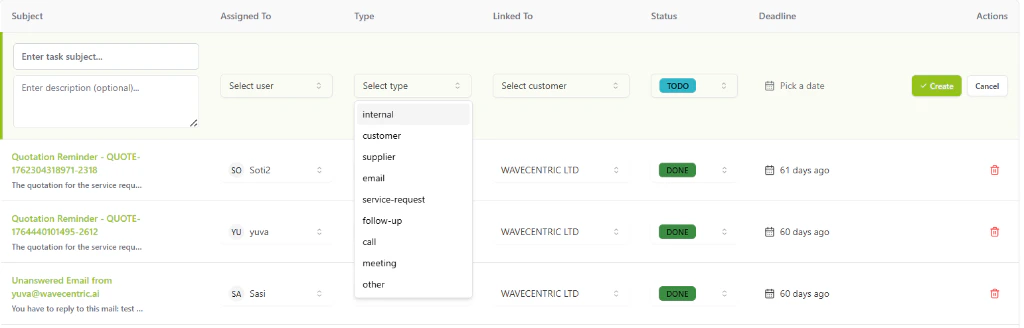
Creating a high-priority task linked to specific operational entities to handle emergencies.
4. Technical Enablement
The platform enables this deliverable through:Real-Time State Synchronization
- Live Collaboration: Changes made to task priorities or statuses are reflected instantly for all users, ensuring the entire team adapts to the “changing condition” simultaneously.
- Entity Graph: The task system is not isolated; it sits on top of the Data Lake, meaning a task can reference any dynamic object (Container, Truck, Order) in the system.