
1. Overview
Centralized Management of Logistics Data and Services serves as the foundational backbone of the Multimodal Chain Design. It fulfills the requirement to “collect and centralize all logistics data allowing users to monitor operations in real-time,” eliminating the fragmentation caused by siloed systems.2. Scope and Business Meaning
Functionally, this deliverable covers the Data Sovereignty & Visibility layer. It ensures:- Unified Repository: All operational data (items, routes, partners) resides in a single, governed ecosystem.
- Real-Time Control: Instant access to the current state of any data point without synchronization latency.
- Fragmentation Elimination: Replacing scattered spreadsheets and disparate databases with a single source of truth.
3. Implemented Functionalities
The platform implements “Centralized Management” through the Data Lake Manager, the core governance tool for all underlying business data.Unified Data Collection
Requirement Addressed: “Collect and centralize all logistics data” The Data Lake provides a centralized interface for defining and populating the logistics universe:- Manual Definition: Create specialized collections from the ground up with custom schemas.
- Bulk Ingestion: Rapidly centralize existing datasets by ingesting CSV/Excel files, automatically deriving schemas to ensure immediate availability. Refer: Data Lake Manager
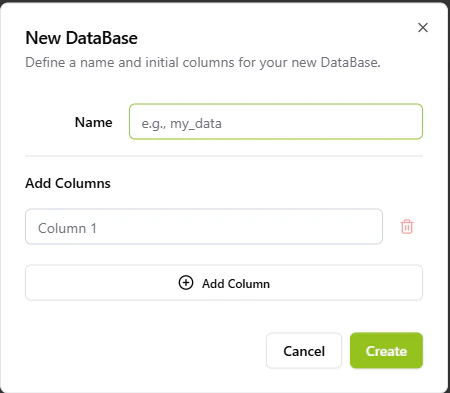
The manual database creation interface for defining new logistics structures.
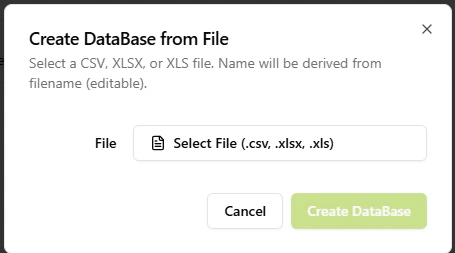
Ingesting external data sources into the central platform.
Real-Time Monitoring & Integrity
Requirement Addressed: “Monitor and manage operations in real-time” The system ensures that data is not just stored, but actively managed:- Atomic Editing: Modify individual records with “focus-mode” precision, ensuring data integrity during real-time updates.
- Advanced Filtering: Use field-specific probes and date-time pickers to instantly isolate specific operational segments.
- Schema Evolution: Modify the structure of live databases (add columns) to adapt to changing logistics requirements without downtime.
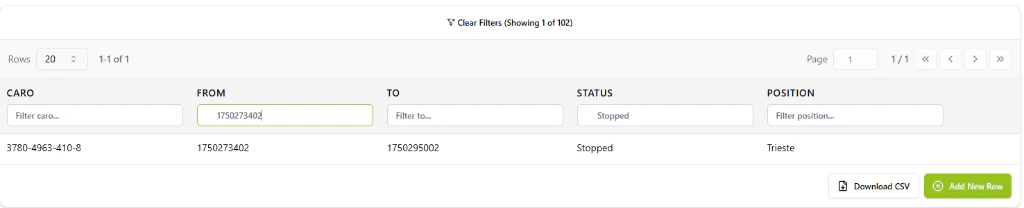
The monitoring interface allows for real-time filtering and management of live logistics data.
4. Technical Enablement
The platform enables this deliverable through:Governance Architecture
- Data Lake Manager: A unified backend service that abstracts the complexity of the database, presenting all collections as managed, searchable, and editable entities. This ensures that “fragmentation” is mechanically impossible, as all data lives within the same governed address space.