
1. Overview
Intuitive and Accessible Interface for End Users drives the adoption of the platform across the entire organization. It fulfills the requirement for an “intuitive and easy-to-use user interface,” ensuring that advanced logistics capabilities are accessible to users regardless of their technical proficiency.2. Scope and Business Meaning
Functionally, this deliverable covers the User Experience (UX) layer. It ensures:- Adoption: Reducing the learning curve to ensure rapid onboarding of new staff.
- Efficiency: Presenting information in a layout that matches the user’s specific role.
- Accessibility: Allowing complex data entry via natural language rather than rigid technical forms.
3. Implemented Functionalities
The platform implements “Intuitive and Accessible Design” through two core functional pillars:Role-Based Personalization
Requirement Addressed: “Drive adoption by users with… skills” The Dashboard Personalization framework allows the complex platform to be simplified for each user:- Modular Widgets: Users can remove clutter and keep only the tools they understand and need (e.g., a simple “Clock” and “Tasks” view for junior staff, complex “Analytics” for managers). Refer: Dashboard Personalization
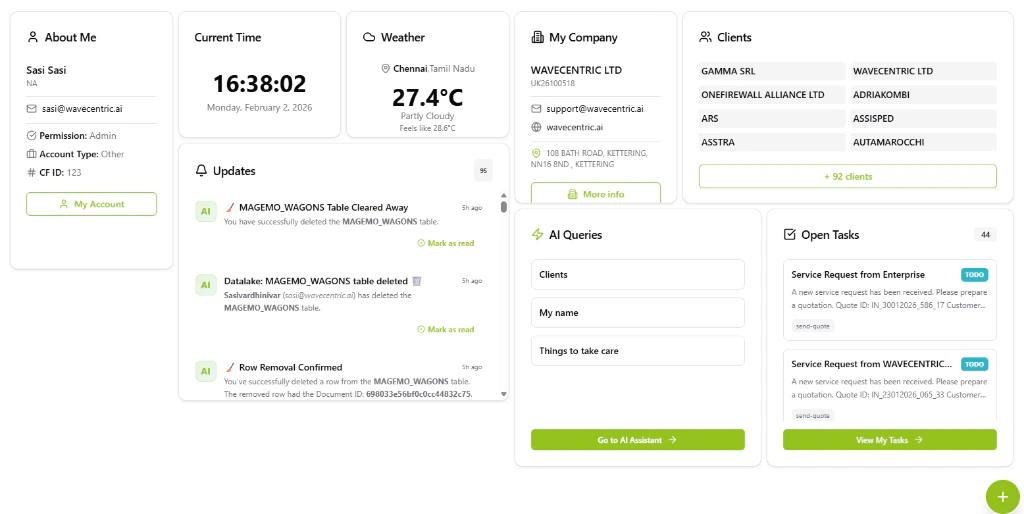
The intuitive, widget-based dashboard that adapts to the user's role and skill level.
AI-Assisted Navigation
Requirement Addressed: “Easy-to-use… for different technology skills” The Navigational AI Assistant guides users through the platform, bridging the gap between intent and execution:- Contextual Guidance: Users can type inquiries like “I need to see customer details” and the AI will provide direct links to the relevant modules (e.g., “Customers Flow”).
- Natural Language Routing: Eliminates the need to memorize menu structures by translating human queries into direct application navigation.
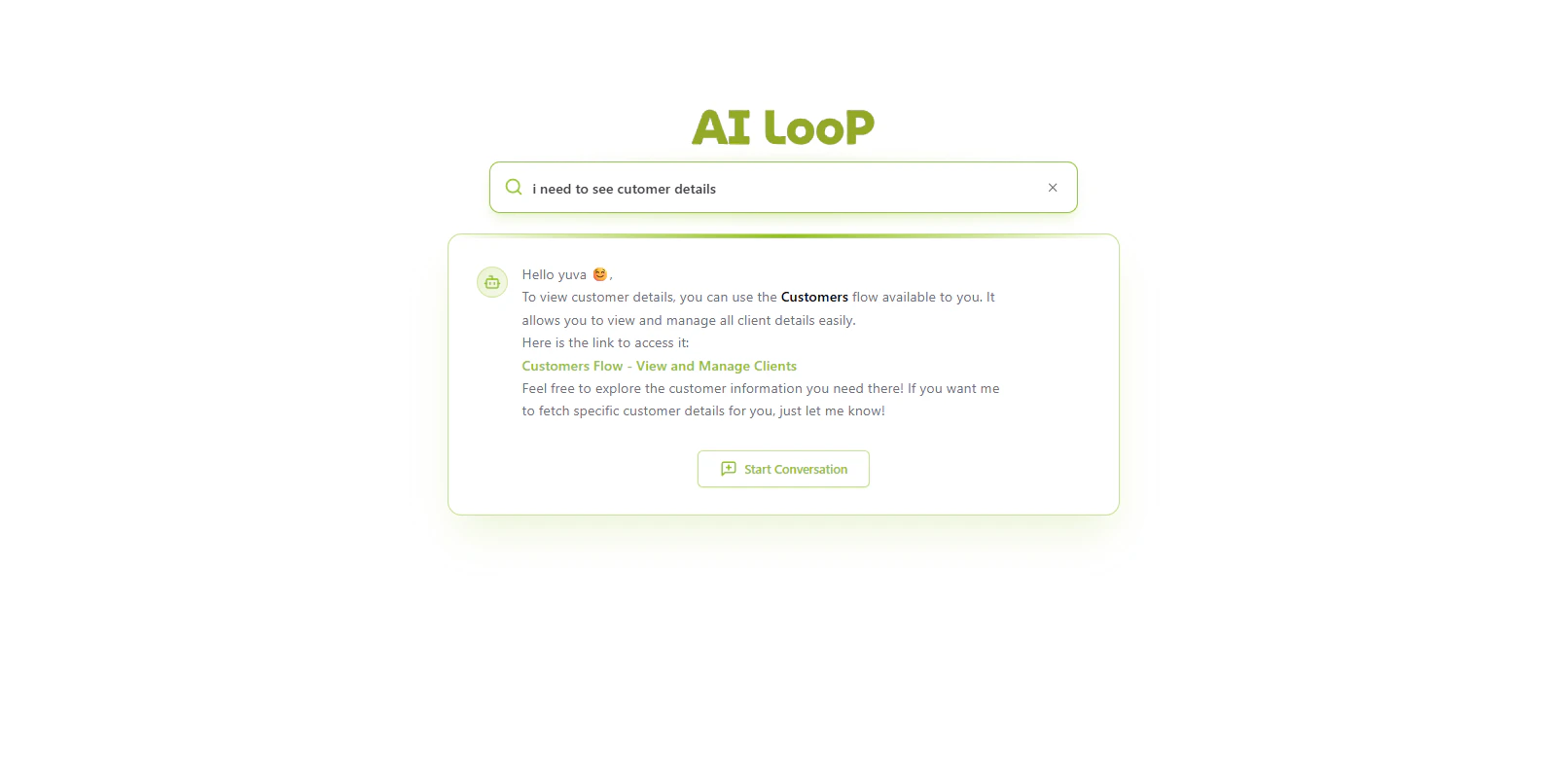
The AI Assistant helping users navigate to specific flows/modules based on natural language queries.
4. Technical Enablement
The platform enables this deliverable through:Component Architecture
WidgetRegistry: A frontend framework that decouples UI components from the core application, allowing for a “Drag-and-Drop” experience.NLP Service: The backend AI layer that translates “Human Language” into “Database Queries,” removing the technical burden from the end-user.