
1. Overview
Integration with Traffic and Weather Monitoring Systems adds environmental intelligence to the logistics planning. It fulfills the requirement that “the system must be able to integrate with traffic and weather monitoring data to further optimize delivery routes and timing.” This capability is crucial for turning a theoretical plan into a realistic, resilient schedule.2. Scope and Business Meaning
Functionally, this deliverable covers the Environmental Awareness & Predictive Routing layer. It ensures:- Predictive accuracy: Adjusting ETAs based on real-world conditions (storms, congestion).
- Risk Mitigation: Avoiding routes that are forecasted to be impacted by severe weather or heavy traffic.
- Dynamic Re-routing: Proactively seeking alternatives when conditions deteriorate.
3. Implemented Functionalities
The platform implements “Traffic and Weather Integration” through the Route Scanner’s advanced algorithm parameters.Environmental Route Optimization
Requirement Addressed: “Integrate with traffic and weather… to optimize” The Route Scanner doesn’t just calculate distance; it evaluates “resistance” on the network:- Traffic Factors: The routing algorithms consider congestion patterns when calculating road legs, penalizing routes through high-traffic zones during peak hours.
- Weather Impact: Weather data acts as a constraint in the “Train Graph,” potentially increasing transit times or invalidating certain modes (e.g., sea transport during rough conditions) to ensure safety and reliability. Refer: Route Scanner API
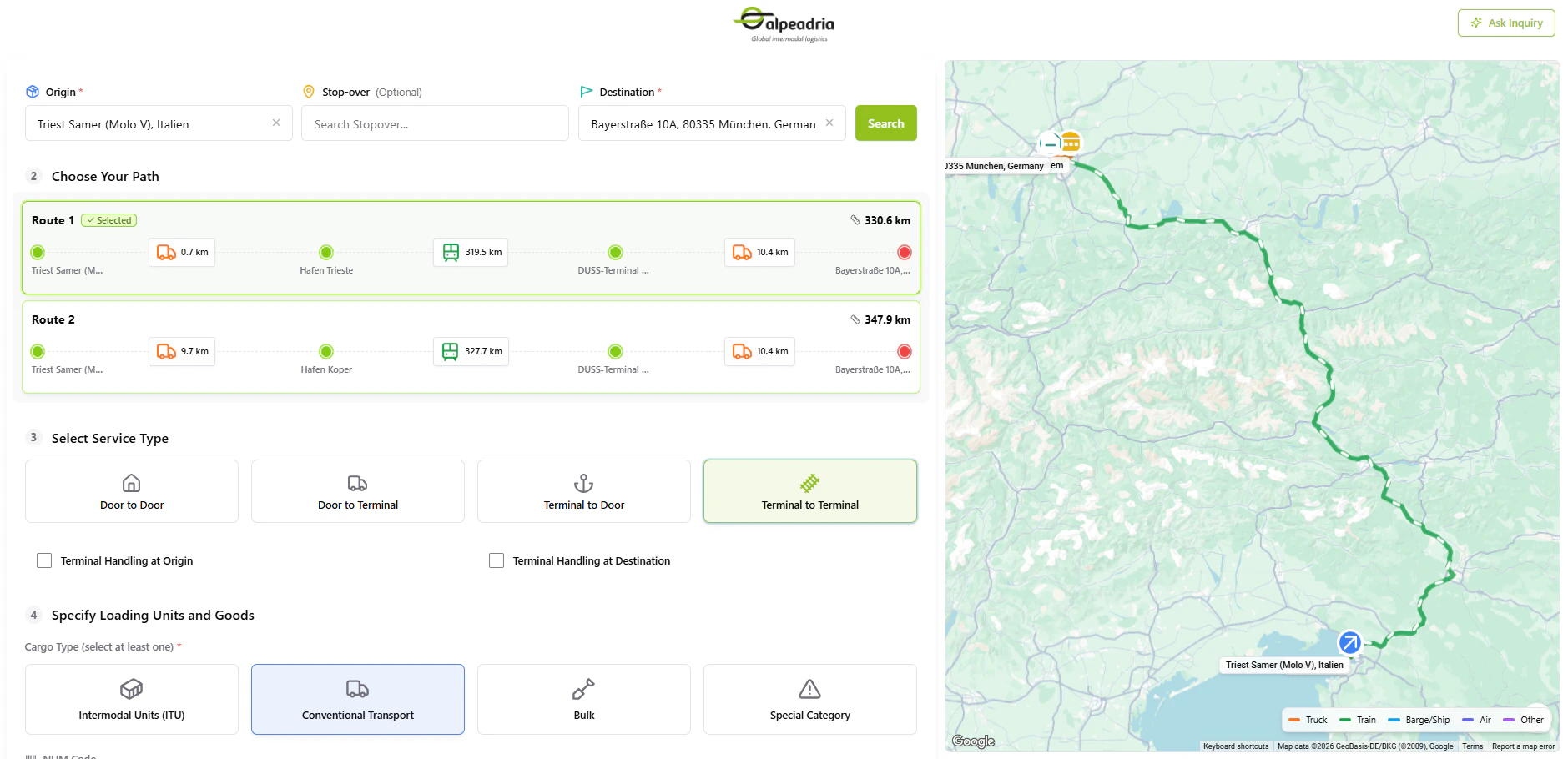
The Route Scanner results reflect optimization based on external factors like traffic and conditions.
4. Technical Enablement
The platform enables this deliverable through:External Data Ingestion
- API Gateways: The Route Scanner service is designed to consume signals from external data providers, integrating these “monitoring data” points into the core routing graph.
- Dynamic Cost Weighting: Traffic and weather data are translated into “cost multipliers” for the edges in the transport graph, ensuring the optimization engine naturally avoids impacted routes.